

What role can chiropractic care play in an active family?
Chiropractic care may support an active household by evaluating movement, discussing musculoskeletal discomfort, and helping people understand how daily habits affect the spine, joints, and muscles. It is not a substitute for emergency care, medical diagnosis, physical therapy, strength training, or rest when those are needed.
Families often have different physical demands under one roof. A child may participate in soccer or gymnastics, a parent may spend long hours sitting or lifting, and another family member may walk, cycle, garden, or exercise recreationally. Chiropractic care generally focuses on the neuromusculoskeletal system, including the back, neck, joints, and related muscles.
The most useful approach is usually specific to the person’s symptoms, age, activity, health history, and goals rather than based on a routine treatment schedule.
Can chiropractic care help with common activity-related discomfort?
It may help some adults with certain types of low-back or neck discomfort, particularly when care is combined with movement, education, and gradual return to normal activity. Research summarized by the National Center for Complementary and Integrative Health indicates that spinal manipulation can be one non-drug option for some low-back pain, although benefits vary and evidence quality differs by condition. ([nccih.nih.gov](https://www.nccih.nih.gov/health/spinal-manipulation-what-you-need-to-know?6df6a1c6_page=3&utm_source=openai))
Active families may seek guidance for issues such as:
- Mild low-back soreness after lifting, running, or prolonged sitting
- Neck or upper-back discomfort related to desks, devices, or driving
- Joint stiffness after a change in activity level
- Muscle tension after yard work, household projects, or recreational exercise
- Difficulty returning to comfortable movement after a minor strain
A careful evaluation should distinguish ordinary activity-related soreness from a more serious injury. Pain that follows a collision, fall, direct blow, or sudden loss of strength deserves appropriate medical assessment rather than repeated self-treatment.
How does care differ for children and teenagers?
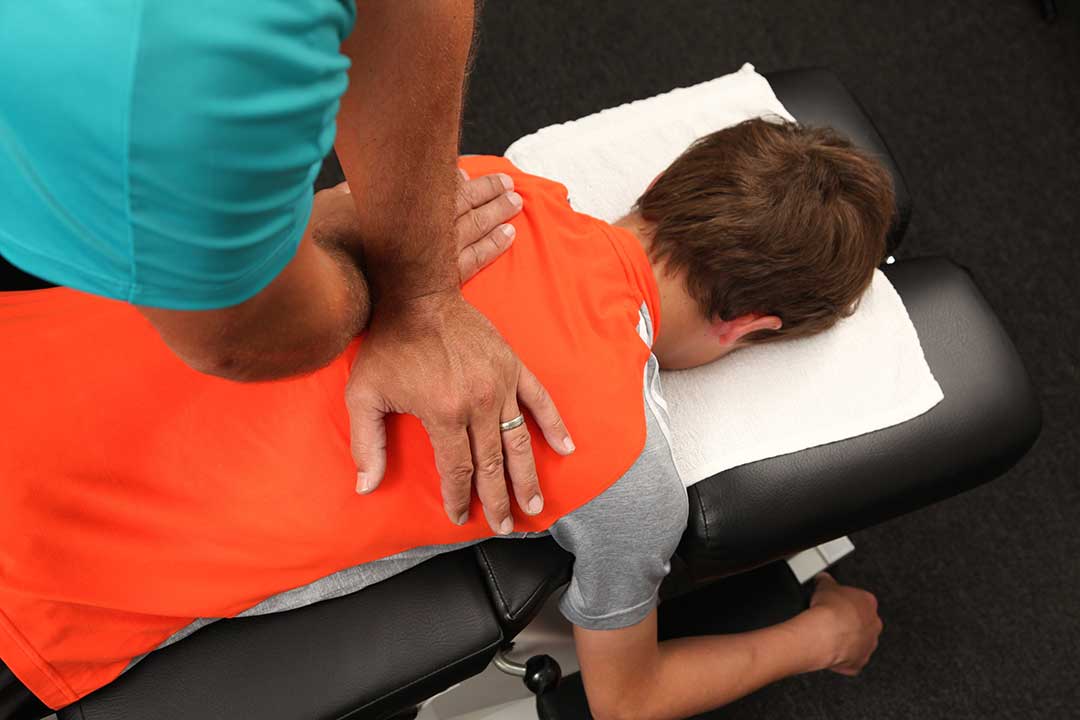
Children should not be treated as smaller adults. Their bones, joints, growth patterns, communication skills, and activity demands are different. Evidence about the effects and safety of spinal manipulation in children is more limited than evidence for adults, and rare but serious complications have been reported. The NCCIH advises parents to discuss complementary approaches with a child’s health care provider and not to delay conventional evaluation or treatment. ([nccih.nih.gov](https://www.nccih.nih.gov/health/tips/things-to-know-about-mind-and-body-practices-for-children-and-teens?utm_source=openai))
For a young athlete, a useful evaluation should include more than the location of pain. Relevant questions may include:
- Did the discomfort begin during practice, competition, or ordinary play?
- Has the child changed sports, training volume, footwear, or equipment?
- Is there swelling, bruising, limping, weakness, numbness, or reduced coordination?
- Does pain occur at rest or wake the child at night?
- Has there been a recent fall, collision, or head impact?
A child with a suspected concussion, significant injury, persistent pain, or neurological symptoms should follow pediatric medical guidance. Chiropractic care should not replace evaluation for fractures, growth-plate injuries, serious joint problems, or concussion.
What can families do between visits?
The everyday habits surrounding activity often matter as much as any hands-on treatment. Adults and children can reduce avoidable strain by increasing activity gradually, varying movement, and allowing recovery after demanding exercise.
For adults, federal guidelines recommend at least 150 minutes of moderate-intensity activity each week, along with muscle-strengthening activity on at least two days. Children and teenagers ages 6 through 17 are advised to get at least 60 minutes of moderate-to-vigorous activity daily, including vigorous, muscle-strengthening, and bone-strengthening activities on several days each week. ([cdc.gov](https://cdc.gov/physical-activity-basics/guidelines/index.html?utm_source=openai))
Practical family habits include:
- Warm up with easy movement before vigorous activity.
- Increase distance, resistance, or training time gradually.
- Alternate demanding activities with lower-impact movement.
- Use rest days when soreness, fatigue, or performance changes persist.
- Adjust backpacks, desks, workstations, and sports equipment for the individual.
- Practice lifting with the load close to the body and avoid twisting while carrying.
- Treat sleep, hydration, and regular meals as part of physical preparation.
In Ossining, seasonal changes can also affect routines. Cold weather may reduce outdoor activity, while snow, ice, and wet surfaces can increase the chance of slips or awkward movements. Families can respond by using stable footwear, clearing walking areas, choosing indoor movement options, and restarting outdoor exercise at a manageable pace after a period of reduced activity.
Is a spinal adjustment the same as injury prevention?
No. An adjustment may address restricted movement or discomfort for some people, but it does not make someone immune to injury. Injury prevention depends on several factors, including conditioning, technique, equipment, recovery, attention to pain, and a gradual training plan.
A common misconception is that pain-free movement always means an injury is fully healed. Some conditions improve temporarily while the underlying problem remains. Another misconception is that more treatment is automatically better. A reasonable plan should be reassessed if symptoms are not improving, are worsening, or are interfering with sleep, school, work, or ordinary activities.
Mild soreness, stiffness, or headache can occur after spinal manipulation and often resolves within a day. Serious complications are considered rare, but they have been reported. People should share relevant medical conditions, medications, previous injuries, and symptoms before treatment. ([nccih.nih.gov](https://www.nccih.nih.gov/health/spinal-manipulation-what-you-need-to-know?6df6a1c6_page=3&utm_source=openai))
When should a family seek medical evaluation first?
Certain symptoms call for prompt medical attention rather than routine musculoskeletal care. Examples include:
- Severe pain after a fall, collision, or other trauma
- New or progressive weakness, numbness, or difficulty walking
- Loss of bladder or bowel control
- Fever, unexplained weight loss, or feeling seriously unwell with back pain
- Chest pain, shortness of breath, fainting, or unusual dizziness
- A head injury followed by worsening headache, repeated vomiting, confusion, or unusual behavior
- Pain that is persistent, worsening, or occurring at rest or during sleep
For back pain without warning signs, staying gently active is often preferable to prolonged bed rest, but the right activity level depends on the cause and severity. MedlinePlus lists exercise, physical therapy, medication, and complementary treatments among possible approaches, with treatment selected according to the individual situation. ([medlineplus.gov](https://medlineplus.gov/backpain.html?utm_source=openai))
How can families use chiropractic care responsibly?
A responsible plan begins with a clear explanation of what is being evaluated, what improvement might reasonably look like, and what other forms of care may be appropriate. Families should feel comfortable asking about risks, alternatives, expected duration, and signs that require referral.
For active households, chiropractic care is best understood as one possible part of a broader movement and health plan. Strength, mobility, age-appropriate activity, protective equipment, recovery, and timely medical assessment all remain central to helping family members stay active safely.
